Pages

Thursday, February 28, 2019

How rubber chickens and wind-up teeth can motivate workers

The recognition doesn't have to be an elaborate gesture. It can be as simple as a rubber chicken. Or goofy wind-up teeth.
Just ask David Novak. The former CEO of Yum! Brands credits much of his career success to his focus on employee appreciation.
"Recognition is the secret weapon to a business," he says.
Novak, who worked his way through the ranks at PepsiCo and later led KFC and Pizza Hut to eventually become co-founder and CEO of Yum, recalls one moment in his career that made him realize how important a simple "thank you" can be.
He had recently been promoted to chief operating officer at Pepsi and was visiting a bottling facility. He was sitting around a table with employees and everyone kept raving about their colleague Bob and how instrumental he was. Novak glanced down the table and saw that Bob was crying. He was set to retire in two weeks and had no idea his coworkers felt this way.
"That hit me in the gut," Novak remembered. "I said as a leader that the number one behavior I am going to show is appreciation, and use it to inspire people. I am going to make recognition my thing as a leader."
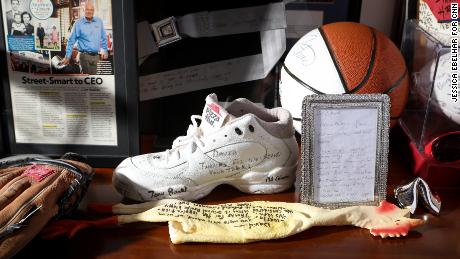
Items gifted to Novak are seen in his office at Yum!'s headquarters.

Creating a culture of recognition

When Novak was promoted to CEO of KFC in 1994, he got more condolence calls than those offering congratulations.
"It was a graveyard for executives," he said. "Morale was down, business was down. It needed energy injected into the business."
That energy came from a rubber chicken.
Novak started handing out the toys -- plus a small cash bonus -- to employees doing a good job. And it worked.
"This took off like you wouldn't believe — it helped turned around the mindset of the organization and we started working together with the franchisees and turned around the quality in three years. And the franchisees were now giving us ideas," he recalled.
Two years later, he also became CEO of Pizza Hut. He continued the tradition, but this time he gave out foam cheese heads.
"When you recognize people, they will work harder. People are starved for attention." Even if the attention is a plastic toy you can pick for a few bucks.
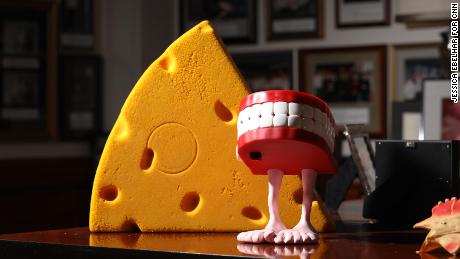
Novak made sure to recognize his employees, whether it was with a chattering teeth toy or cheese head hat.
Sometimes, he would give out the awards spontaneously, like when he saw an employee exemplifying the company's culture during one of his visits to a restaurant. Other times, it would be planned so the recognition would occur during a meeting where he knew he'd be able to honor an employee that had gone above-and-beyond expectations.
On each trinket he would write a personalized note about why the employee was receiving the accolade. Sometimes it was for quality food preparation. Other times it was for outstanding company service or leadership on project. The award also came with a cash bonus, which started at $100.
"You have to be very specific with what the person has tangibly done and how it is contributing to the success of the organization. It has to be purposeful."
As CEO of Yum! Brands, which operates Taco Bell, KFC and Pizza HutTen, Novak was using the chattering teeth to reward employees and increased the cash bonuses to $300. And the recognition culture was spreading. His team leaders had started giving out their own recognition awards — with their own personal touches.
"The most effective recognition is something you like and have fun doing and tailoring it to the individual and tying it to the principle you want to see more of," says Novak.
Yes, his rewards were on the silly side, but they were coveted. Novak recalled one employee who kept the award in a safe.
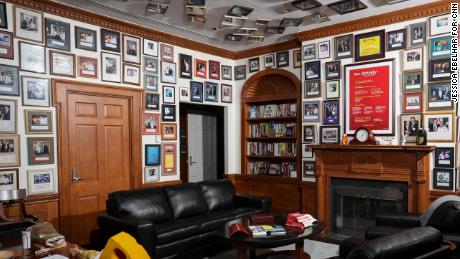
Novak's office walls and ceiling are lined with photos of him with former employees and their recognition awards.
As the recognition culture spread, employee turnover decreased at the company, and it became easier to retain and recruit new hires.
"The culture became a big part of why people wanted to come to our company," Novak said.
He always took a picture with award recipients, which he later had framed. He would then send one copy to the employee and kept the other.
Novak covered his office walls with the pictures — more than 1,400 of them — and when he ran out of room, he hung them on the ceiling and in the hallways.

A legacy of appreciation

During Novak's tenure, Yum's market capitalization increased from $4.6 billion to around $31 billion. He retired in 2016, but the recognition culture he started is still a big part of the company.
"David Novak laid the foundation for Yum!'s people-first culture and strong focus on recognition, which remains a key driver of our growth and values today," said Greg Creed, current CEO of Yum! in a statement to CNN. "His tremendous leadership continues to guide how we engage and develop our employees around the world to positively impact our customers, shareholders and franchisees."
He still visits Yum's headquarters in Kentucky from time to time. The awards still hang in the office and seeing them still makes him swell with pride.
"I have a great office. It symbolizes what our company is about and puts me in a great mood. I feel privileged to be a leader."
One of the biggest reasons people leave their job is lack of appreciation. But some leaders can be hesitant to dole out the accolades for fear of upsetting or alienating other employees.
Novak says that's why you need to recognize employees often. "It only becomes a problem if you only recognize people once a year."
Correction: A previous version of this story incorrectly stated that Yum! Brands headquarters is in Tennessee. Yum is based in Louisville, Kentucky.

Let's block ads! (Why?)

from CNN.com - RSS Channel https://ift.tt/2IIyuqw

Trayvon Martin Shooting Fast Facts

Facts:
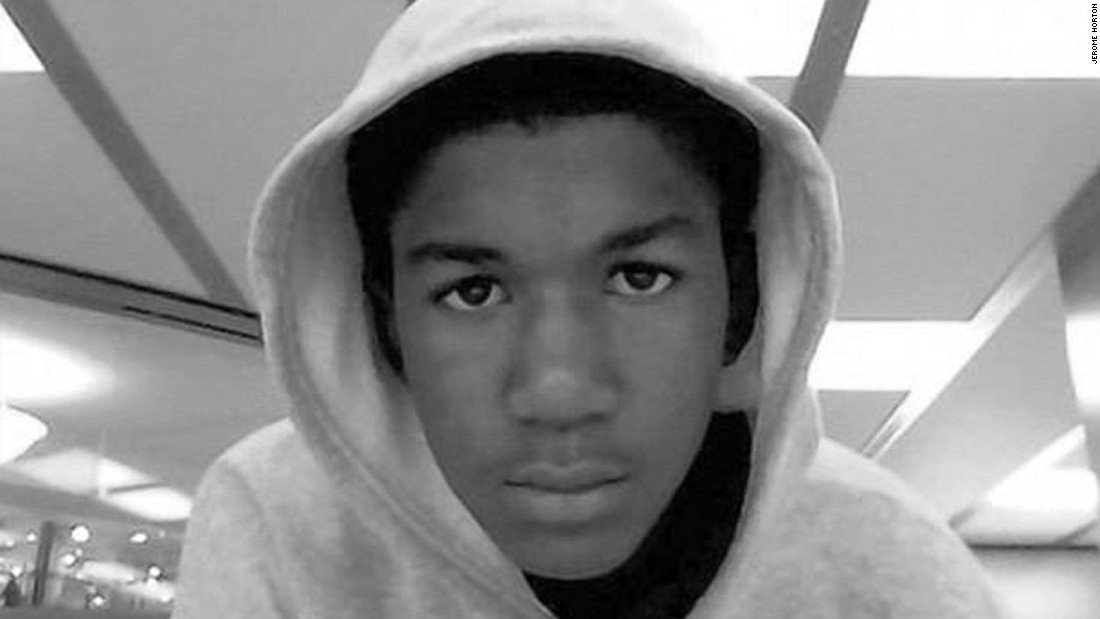
Trayvon Benjamin Martin, born February 5, 1995, was a 17-year-old African-American high school student who lived in Miami Gardens, Florida, with his mother, Sybrina Fulton. In February 2012, Martin was visiting his father, Tracy Martin in Sanford, Florida, after receiving a ten-day suspension from Krop Senior High School. The suspension stemmed from the discovery of drug residue in Martin's book bag.
George Michael Zimmerman, born October 5, 1983, was a part-time student at Seminole State College and a neighborhood watch captain for the Retreat at Twin Lakes gated community in Sanford, Florida, at the time of the shooting.
Timeline:
February 26, 2012 - George Zimmerman, a neighborhood watch captain in Sanford, Florida, calls 911 to report "a suspicious person" in the neighborhood. He is instructed not to get out of his SUV or approach the person. Zimmerman disregards the instructions. Moments later, neighbors report hearing gunfire. Zimmerman acknowledges that he shot Martin, claiming it was in self-defense. In a police report, Officer Timothy Smith writes that Zimmerman was bleeding from the nose and back of the head.
February 27, 2012 - Martin's father, Tracy Martin, files a missing person's report. Officers with the Sanford Police Department visit Tracy Martin. He is able to identify his son's body using a photo.
March 8, 2012 - Investigators receive a fax from the Altamonte Family Practice containing medical records identifying the injuries sustained by Zimmerman on the night of the shooting: Open wound of scalp, without mention of complication; nasal bones, closed fracture; assault by other specified means.
March 12, 2012 - Sanford Police Chief Bill Lee says that Zimmerman has not been charged because there are no grounds to disprove his version of the events.
March 13, 2012 - Sanford Police Department's homicide detective Christopher Serino recommends Zimmerman be charged with manslaughter. Zimmerman "failed to identify himself" as a concerned citizen or neighborhood watch member on two occasions that night. Serino reports that he thought Zimmerman's head injuries were "marginally consistent with a life-threatening episode, as described by him, during which neither a deadly weapon nor deadly force were deployed by Trayvon Martin."
March 14, 2012 - The case is turned over to Florida State Attorney Norm Wolfinger.
March 15, 2012 - In a letter to the Orlando Sentinel, Robert Zimmerman, George Zimmerman's father, writes that his son has been unfairly portrayed as a racist, and that he is Hispanic and grew up in a multiracial family.
March 16, 2012 - Authorities release seven 911 calls from the night of the shooting. In one of the 911 recordings, Zimmerman, against the advice of the 911 dispatcher, follows Martin. In one of the recordings, a voice screams "Help, help!" in the background, followed by the sound of a gunshot.
March 19, 2012 - The Justice Department and the FBI announce that they have launched an investigation into Martin's death.
March 20, 2012 - A lawyer for the Martin family, Benjamin Crump, holds a news conference, telling reporters that Trayvon was on the phone with his 16-year-old girlfriend at the time of the shooting. The girl, who wishes to remain anonymous, says she heard someone ask Martin what he was doing and heard Martin ask why the person was following him, according to Crump. The girl then got the impression that there was an altercation in which the earpiece fell out of Martin's ear and the connection went dead.
March 22, 2012 - A petition on Change.org calling for the arrest of Zimmerman, created by the parents of Martin, surpasses 1.3 million people.
March 22, 2012 - Sanford Police Chief Bill Lee announces he is stepping down "temporarily" as head of the department, which has been criticized for its handling of the fatal shooting.
March 22, 2012 - Florida Gov. Rick Scott announces he is appointing Angela B. Corey of the 4th Judicial Circuit as state attorney in the investigation, replacing Wolfinger, state attorney for Florida's 18th District, which includes Sanford, Florida.
March 23, 2012 - President Barack Obama speaks out publicly for the first time on the growing controversy over the shooting of Trayvon Martin, saying that the incident requires national "soul-searching."
March 26, 2012 - Exactly one month after Trayvon Martin's death, rallies take place in cities across the country, including Sanford, Florida, where the City Commission holds a town hall meeting on the incident and its aftermath. Martin's parents speak at the meeting.
March 28, 2012 - Zimmerman's father appears on television and says that Martin threatened to kill his son and then beat him so badly Zimmerman was forced to shoot.
March 29, 2012 - Zimmerman's brother, Robert Zimmerman Jr., appears on CNN and says medical records will prove that his brother was attacked and his nose was broken by Martin before he fatally shot the teen.
April 2, 2012 - FBI agents interview Martin's girlfriend who was on the phone with him shortly before the fatal confrontation.
April 3, 2012 - Zimmerman's legal adviser, Craig Sonner, says that criminal defense lawyer Hal Uhrig will represent Zimmerman and that Sonner will serve as co-counsel if the case proceeds.
April 7-8, 2012 - Zimmerman launches a website warning supporters about groups falsely claiming to be raising funds for his defense. The site includes a link through which donations can be made to pay for Zimmerman's lawyers and living expenses.
April 9, 2012 - Prosecutor Angela Corey announces that she will not present the case to a grand jury.
April 10, 2012 - Attorneys Uhrig and Sonner announce that they have lost contact with Zimmerman and no longer represent him.
April 11, 2012 - Zimmerman is charged with second-degree murder. His new lawyer, Mark O'Mara, tells CNN that Zimmerman has turned himself in.
April 18, 2012 - Seminole Circuit Court Judge Jessica Recksiedler, who is assigned to Zimmerman's case, approves a motion to disqualify herself from the criminal case because her husband works as a CNN legal analyst.
April 18, 2012 - It is announced that Seminole County Circuit Judge Kenneth Lester Jr. will take over Zimmerman's case.
April 20, 2012 - Zimmerman's bond hearing is held. Judge Lester sets Zimmerman's bond at $150,000. During the hearing, Zimmerman apologizes to the family of Martin for the loss of their son.
April 23, 2012 - Zimmerman is released on bail at 12:05 a.m. Later in the day, Zimmerman enters a written not guilty plea and waives his right to appear at his arraignment.
May 8, 2012 - Judge Lester accepts Zimmerman's written plea of not guilty.
May 15, 2012 - A medical report by Zimmerman's family doctor, taken a day after the February 26 shooting, shows Zimmerman was diagnosed with a fractured nose, two black eyes and two lacerations on the back of his head.
June 1, 2012 - Judge Lester revokes Zimmerman's bond and orders him to surrender within 48 hours after the prosecution argues that Zimmerman and his wife, Shellie Zimmerman, misrepresented their finances when Zimmerman's bond was originally set in April.
June 3, 2012 - Zimmerman surrenders to authorities and is taken into custody at the John E. Polk Correctional Facility in Seminole County, Florida.
June 12, 2012 - Zimmerman's wife is arrested and charged with perjury.
June 20, 2012 - Sanford Police Chief Lee is officially fired.
June 25, 2012 - Zimmerman's attorney files a motion requesting a "reasonable bond" be set for Zimmerman's release from jail.
July 5, 2012 - The judge sets Zimmerman's bond at $1 million.
July 6, 2012 - Zimmerman is released from jail after posting the required 10% of the $1 million bond ($100,000).
July 13, 2012 - Zimmerman's legal team files a motion requesting Judge Lester step down from the case. The motion claims Zimmerman cannot get a fair trial because Lester used "gratuitous, disparaging" language in the previous week's bail order.
July 18, 2012 - Zimmerman, appearing on Fox News' "Hannity" show, does his first television interview since the shooting. He says he would not do anything differently.
August 9, 2012 - A photo of Martin's body and Zimmerman's school records are mistakenly released by prosecutors. Special Prosecutor Angela Corey's office issues a statement asking reporters to "please disregard and do not use the information contained in the initial e-mail. It was inadvertently attached."
August 13, 2012 - Zimmerman appeals Judge Lester's refusal to recuse himself with the Fifth District Court of Appeals.
August 29, 2012 - A Florida appeals court grants Zimmerman's request for a new judge, saying Judge Lester's remarks in a bail order put Zimmerman in reasonable fear of a fair trial.
August 30, 2012 - Judge Debra Nelson is assigned to replace Judge Lester in the Zimmerman case.
December 7, 2012 - Zimmerman sues NBC Universal for allegedly editing the 911 call he placed on the night of the tragic event. He states in the lawsuit that NBC unfairly made it appear that "Zimmerman was a racist, and that he was racially profiling Trayvon Martin."
February 9, 2013 - The Justice for Trayvon Martin Foundation hosts a "Day of Remembrance Community Peace Walk and Forum" in Miami. It takes place four days after what would have been Martin's 18th birthday.
March 5, 2013 - Lawyer Mark O'Mara decides against seeking a pretrial "stand your ground" immunity hearing for Zimmerman citing lack of preparation time.
April 5, 2013 - Martin's parents settle a wrongful-death claim against the homeowners' association of the Florida subdivision where their son was killed.
April 30, 2013 - Zimmerman waives his right to a "stand your ground" pretrial immunity hearing. Zimmerman's attorneys decide they will instead try this as a self-defense case. If Zimmerman had had a pretrial immunity hearing, a judge would have ruled whether his actions were protected under the "stand your ground" law. If the judge had ruled in favor of Zimmerman, it would have meant that no criminal or civil trial could proceed.
May 28, 2013 - Judge Nelson rules on several motions brought by the defense. Nelson rules that Martin's familiarity with guns, his marijuana use, and fights he may have been in cannot be brought up in Zimmerman's trial. She also denies a request to take the jury to the crime scene. Nelson, however, rules that jurors will remain anonymous and will be referred to by numbers only.
June 20, 2013 - An all-female jury is selected.
June 24, 2013 - The trial begins with opening statements.
July 13, 2013 - The six-woman jury finds Zimmerman not guilty. They had three choices: to find Zimmerman guilty of second-degree murder; to find him guilty of the lesser charge of manslaughter; or to find him not guilty. The jurors deliberated for more than 16 hours total.
August 28, 2013 - Shellie Zimmerman pleads guilty to a misdemeanor charge of perjury. Prosecutors say she lied when she told a judge during an April 2012 bond hearing for her husband that the family was indigent.
2014 - The Trayvon Martin Foundation, a social justice organization, is established on the campus of Florida Memorial University in Miami Gardens, Florida.
February 24, 2015 - The US Justice Department announces that no federal civil rights charges will be brought against Zimmerman.

Let's block ads! (Why?)

from CNN.com - RSS Channel https://ift.tt/2IpKw87