Pages

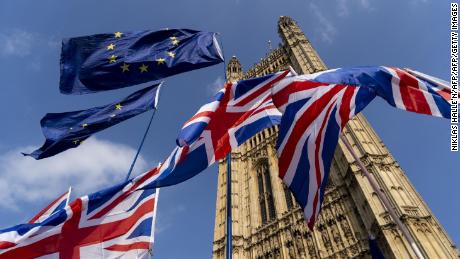
The UK has left the EU -- and the implications for the world are huge

It has ended the careers of two Prime Ministers and left the very future of the United Kingdom in question. Scotland's case for independence is becoming harder to ignore while Britain's perceived selling out of Northern Ireland has played into the hands of those wishing to see Irish unification.
That's just the politics: Britain's economic future and place in the world have not been this uncertain since the end of the World War II.
Speaking to the nation an hour before Brexit finally happened, Prime Minister Boris Johnson acknowledged that the country was divided: "For many people this is an astonishing moment of hope, a moment they thought would never come. And there are many of course who feel a sense of anxiety and loss ... I understand all those feelings, and our job as the government -- my job -- is to bring this country together now and take us forward."
Britain is leaving the European Union today. The hard part comes next
Johnson has political capital to spend. His election landslide last year means he has the power to start rebuilding the UK in his own image. It also means he can remold the country's position on the international stage. And in a world of shifting geopolitics, whatever path Johnson decides to walk will have implications beyond Britain's borders.
The key question that needs answering in the next 11 months: Will the UK stick with its European neighbors and their multilateral view of the world? Or will it drift across the Atlantic and team up with an increasingly confrontational American foreign policy?
Why 11 months? Because, according to the deal Britain signed with the EU, this Brexit transition period ends on December 31, and whatever deal the two parties have reached on their future relationship -- if any -- kicks in.
Mark Leonard, director of the European Council on Foreign Relations think tank, says that Johnson faces a huge strategic choice: "For decades, the foundation of British foreign policy has rested on two pillars: the UK has been an influential member of the EU; it is also part of the transatlantic alliance, with NATO and the US at its core."
In an ideal world, post-Brexit Britain would now be free to forge new economic relations with both the EU and the US, while maintaining a diplomatic equilibrium that allows it to be a power broker between the two.
But as Trump's America drifts further from the European agenda on so many big issues -- from climate change to Iran engagement with China -- any decision Johnson makes favoring one party risks straining relations with the other.
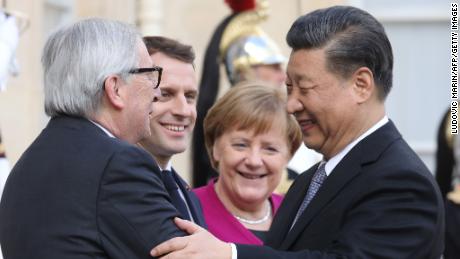
Johnson is already attempting to navigate the China minefield that stretches across Europe.
The EU's China problem is acute. On one hand, stagnating European economies benefit from Chinese investment. On the other, that investment comes with the potential security risk of allowing state-owned Chinese companies to operate in Europe. And that has implications for Europe's intelligence-sharing allies, such as the US.
Earlier this week, Johnson's government decided that it would allow the Chinese telecoms firm Huawei to build part of the UK's 5G network, despite serious security concerns. The government said Huawei's role in the project would be restricted to areas that meant it wasn't a risk to the UK.
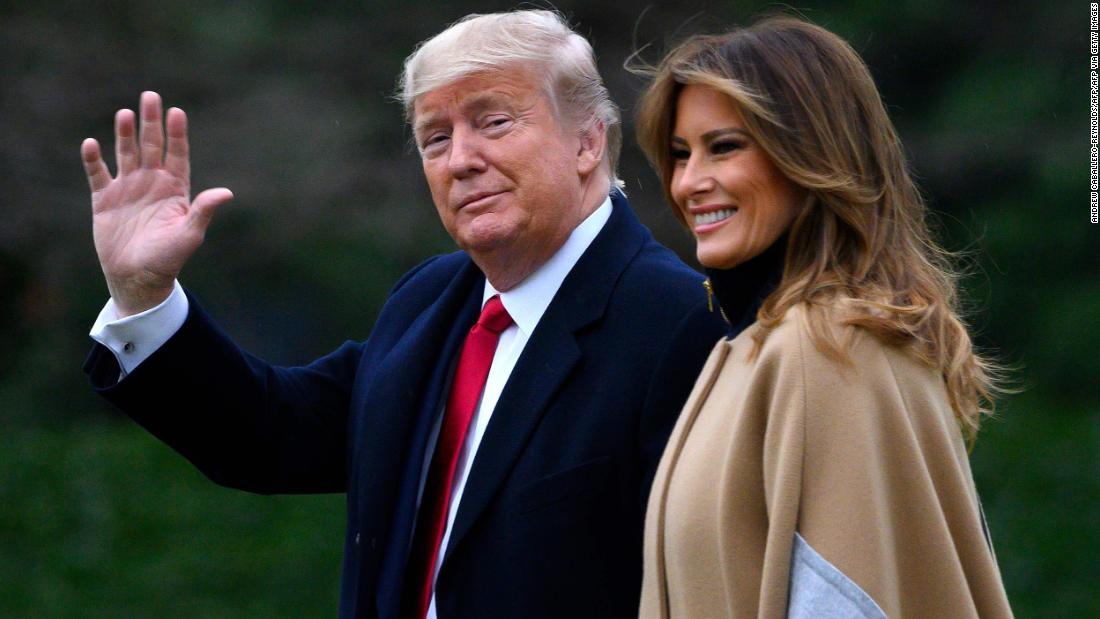
One person unlikely to be happy about this is US President Donald Trump. In his economic war with China, Trump is looking for friends. And as the UK leaves the EU, desperate to sign trade deals -- especially with the US -- he sees an opportunity to pull the UK into his orbit.
Trump seemed distracted as the news broke on Tuesday and it's possible that London's assurances were enough for the President. However Johnson chooses to handle the Huawei issue going forward, officials in both Brussels are DC will be paying very close attention. And whatever decisions he takes, it creates an immediate short-term problem for Europe's own power-balancing act between the US and China.
"The EU's top priority is balanced relations between the big two: China and America," says Steven Blockmans, head of foreign affairs at the European Center for Policy Studies. "If the UK has a closer relationship with either, it could create problems for Europe."
Europe also has a complicated relationship with Russia. Many EU nations rely on Russian investment and natural resources. But Europe has led a sanctions charge on Russia for its illegal annexation of Crimea and alleged state-sanctioned attacks on Russian dissidents living in Europe. Arguably the most high-profile of these cases was the poisoning of Sergei Skripal in England. Russia has repeatedly denied any involvement.
Johnson was British foreign secretary at the time and was quick to blame Moscow, driving a push for the international expulsion of Russian diplomats.
That was then. During last year's election, Johnson made big spending promises to the public he now leads. Russian investment could help make ends meet, given that the City of London is a favored destination for wealthy Russians.
"A clampdown on assets that are held or transferred through the city is crucial to maintaining a common European stance," says Blockmans. Johnson's advisers assume he will stick to his hard line on Russia, but there are long-term concerns in eastern Europe. If he budges even slightly, it causes problems for Ukraine, whose independence from Russia is an EU priority.
Sarah Lain, an associate fellow at the Royal United Services Institute, says that Brexit "creates uncertainty over what resources the UK will have to maintain its position on eastern Europe."
While the UK remains committed to supporting Ukraine, Kiev's concern is that, "given the possible economic impact from Brexit and the perceived blow to the UK's reputation as a strong foreign policy actor," Britain might be unable to support Ukraine in the same way, says Lain.
Johnson's policy shifts could be subtle. But they will color a complicated picture in the international community. A big economy with serious diplomatic power nudging in one direction shifts the weight in a delicate balancing act.
The most complicating factor in all of this, of course, is the unreliable figure currently occupying the White House -- who happens to be up for reelection in November.
"We are in a period of negotiating a new world order, and Britain needs to navigate a path that maintains strong relations with as many of our allies as possible," says Sophia Gaston, managing director of the British Foreign Policy group.
That new world order will largely be determined by how successful Trump is in his attempts to reshape the world to America's advantage, and of course, if he's still in the White House this time next year. "The UK is leaving the EU at a time when Trump is trying to renegotiate the transatlantic relationship as he pivots his attention from Europe and the Middle East to competition with China and Asia," says Leonard.
It's no secret that Trump's priority with Brexit is a trade deal that could buck global norms on food standards and the regulation of medicines. Doing so would present the US with the opportunity to set precedents in trade that were previously unthinkable -- and could even see a hike in global drug prices.
For Johnson, a trade deal with Washington would be a political prize, proving that Brexit had been worth it all along. However, a wide-ranging deal with America could damage the UK's relationship with the EU. Leonard says that Trump, unlike presidents before him, is "much more transactional" in his dealings with other nations. The price of cozying up to him could cost Johnson big with European allies.
China is a massive headache for Europe
So, what will he do? Gaston believes that Britain will ultimately "operate as a mid-tier military power with top-tier assets in soft power, diplomacy and development."
The big question: what global status does Johnson want the UK to have five years from now, when Brexit is done and dusted? "There's a danger that as Britain leaves the EU, it puts getting trade deals above all else and will not be a big strategic player as it becomes obsessed with bilateral relationships," says Leonard.
As foreign secretary, Johnson didn't say much about how he saw the new world order. As the UK moves into its brave new future, the world is still in the dark as to exactly who will benefit from its considerable heft.
And while some claim that this won't matter, it's not a view shared by those at the helm of many world powers. If Johnson does decide to move further from Europe, there's "a danger from a European perspective that Britain could become a disrupter, a bit like Turkey or Russia, that tries to divide and rule different European countries, is not reliable and is unpredictable," says Leonard.
And if it does drift across the Atlantic towards America, Brussels could soon miss having one of the world's loudest diplomatic voices, with nuclear weapons, a big economy, a world-class intelligence network and a permanent seat on the UN security council, firmly in its ranks.
Let's block ads! (Why?)

from CNN.com - RSS Channel https://ift.tt/2RP9hNH

John Roberts, as Senate trial nears end, finally says he won't break ties

Speculation had mounted during the trial whether Roberts would act, as Democrats hoped the chief could help them force the Republican majority to allow witnesses to be called. A chief justice had previously settled Senate ties in an impeachment trial -- back in 1868 -- Senate Minority Leader Chuck Schumer, a New York Democrat, noted.
Why Elizabeth Warren's question on John Roberts may have backfired
But when asked directly about whether he would get involved, Roberts said he would not.
Here's the exchange:
Schumer: "Is the chief justice aware that in the impeachment trial of President Johnson, Chief Justice Chase, as presiding officer, cast tie-breaking votes on both March 31 and April 2, 1868?"
Roberts: "I am, Mr. Leader. The one concerned a motion to adjourn; the other concerned a motion to close deliberations. I do not regard those isolated episodes 150 years ago as sufficient to support a general authority to break ties. If the members of this body elected by the people and accountable to them divide equally on a motion, the normal rule is that the motion fails. I think it would be inappropriate for me, an unelected official from a different branch of government, to assert the power to change that result so that the motion would succeed."

Ready for the question

Roberts was prepared for this moment, with a response to Schumer at the ready. The chief had narrowly avoided having to preside over a 50-50 split earlier Friday, when the Senate rejected by 49-51 the Democratic effort to call witnesses to the trial.
On the court, with four liberals and five conservatives, Roberts is essentially the decider for how the justices will rule on controversial issues. The George W. Bush appointee has been at the center of rulings on campaign finance, the Voting Rights Act and, famously, saving Obamacare in 2012.
But despite his longtime prominence, Roberts has been in the public spotlight this month more than ever before. The Supreme Court doesn't allow cameras or TV coverage of arguments, so while Roberts oversees the federal judiciary, most Americans had likely not seen or heard him doing so.
In public speeches, Roberts routinely declares that judges are not like politicians and that their rulings arise from facts and the law.
"When you live in a politically polarized environment," he said in a New York appearance last year. "People tend to see everything in those terms."
The Constitution establishes the chief justice as the presiding officer for an impeachment trial, but it is unspecific about how much power that person would have.
Why Elizabeth Warren's question on John Roberts may have backfired
In Johnson's 1868 trial, Chief Justice Salmon Chase broke tie votes twice, but his overall political approach remains controversial today. In 1999, when Chief Justice William Rehnquist oversaw the impeachment trial of President Bill Clinton, he never faced an evenly split Senate vote. Rehnquist saw his role as more ministerial than the authority Chase had seized.
Roberts, a former Rehnquist clerk, took the latter approach.
Overall, Roberts has firmly enforced Senate impeachment rules.
Early on, he warned the dueling legal teams to watch their inflammatory rhetoric, referring to a 1905 case that condemned the use of the word "pettifogging." And just as with Friday evening's declaration, Roberts had appeared to have language at the ready to cite.
On Thursday, Roberts was irked by Sen. Rand Paul's effort to force him to read the name of the alleged whistleblower who had brought attention to Trump's July conversation with Ukraine's President over security aid and a possible Ukrainian investigation into former Vice President Joe Biden.
After Roberts made his declaration Friday night, Democrats proposed an amendment that would give him the authority and responsibility to rule on motions to subpoena witnesses and documents. The Senate, on party lines, sidelined the motion.
This story has been updated with additional details of Roberts' action.

Let's block ads! (Why?)

from CNN.com - RSS Channel https://ift.tt/2ucjZ7R

Coast Guard officer accused of plotting attack sentenced to more than 13 years

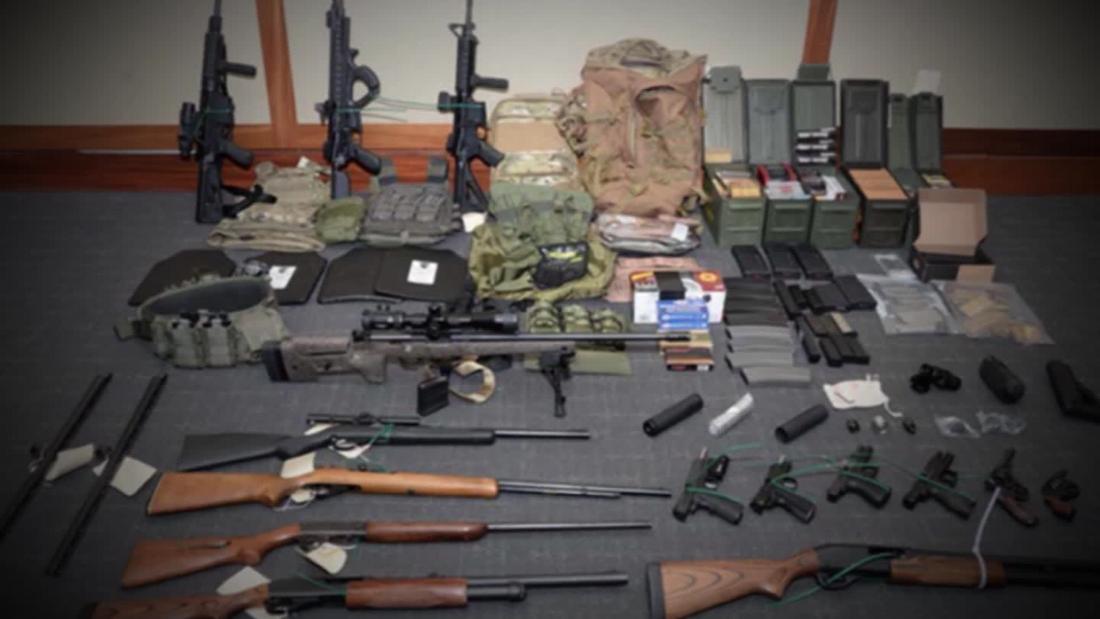
Christopher Hasson, 50, had pleaded guilty to weapons and drug charges last year. The sentencing capped a case that underscored the challenges the Justice Department faces when bringing domestic terrorism cases.
In court documents, prosecutors had said that Hasson was a white nationalist who searched the internet for the home addresses of two Supreme Court justices and the "best" gun to kill African-Americans with.
But last year, Hasson was nearly released after a Maryland judge sided with his defense, which had argued that prosecutors were overblowing the allegations against him and developing a profile of a mass shooter "that does not line up with the facts" and the charges that he faced.
Another judge later vacated that order, and Hasson has remained in custody.
In a statement, Maryland US Attorney Robert Hur said "lives were saved" when law enforcement made the decision to arrest Hasson ahead of a possible attack.
"Christopher Hasson intended to inflict violence on the basis of his racist and hateful beliefs," Hur said. "As long as violent extremists take steps to harm innocent people, we will continue to use all of the tools we have to prevent and deter them."

Let's block ads! (Why?)

from CNN.com - RSS Channel https://ift.tt/2GJUwFu

Organizer of conservative conference won't invite Mitt Romney after impeachment trial vote

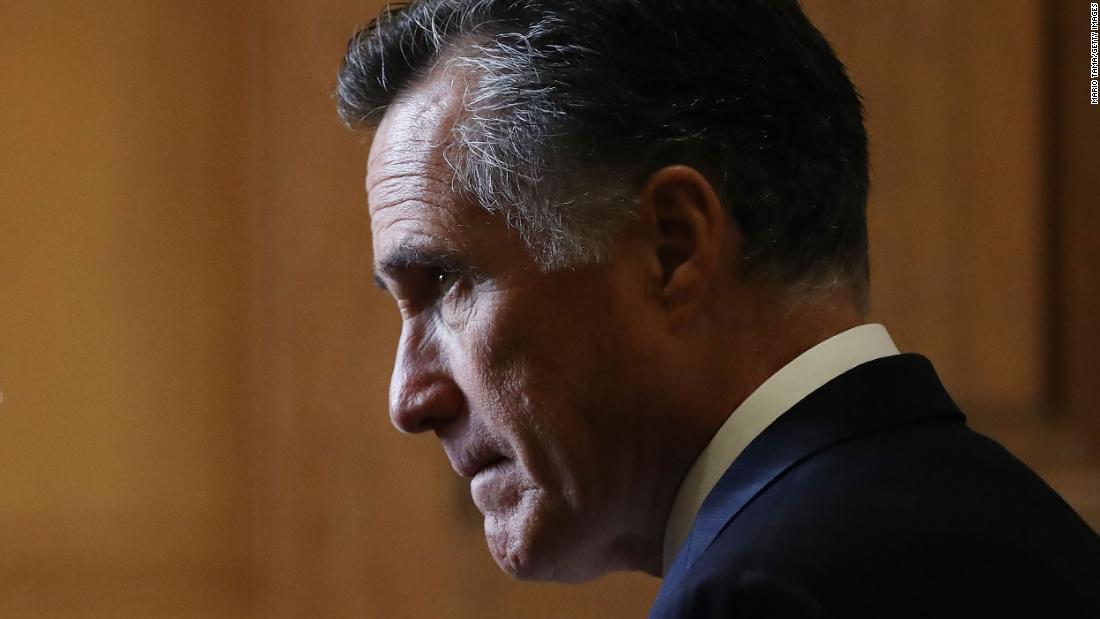
Matt Schlapp, chairman of the Conservative Political Action Conference, tweeted on Friday, "BREAKING: The 'extreme conservative' and Junior Senator from the great state of Utah, @SenatorRomney is formally NOT invited to #CPAC2020."
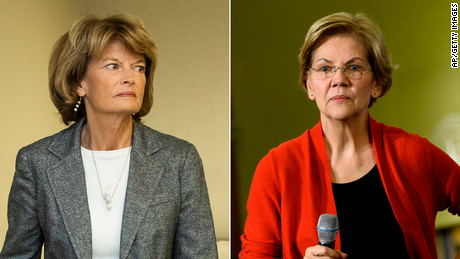
Romney and Sen. Susan Collins of Maine were the only two Republicans to break ranks and join the chamber's 47 Democrats in voting to allow subpoenas for witnesses and documents, a move that would have extended the trial. The pair's efforts failed, as their fellow potential Republican defectors, Sens. Lisa Murkowski of Alaska and Lamar Alexander of Tennessee, ultimately voted against witness testimony to seal the 51-49 total.
Schlapp's tweet appeared to reference when Romney, while running for president in 2012, infamously said he was "severely conservative" -- not "extremely conservative" -- at CPAC. President Donald Trump has spoken at the conference several times.
CNN reported Friday morning that Romney intended to vote in favor of witness testimony during the trial as expected, according to an aide. During a break in proceedings on Friday evening, Romney, Collins, Murkowski and Alexander were among a number of senators who met with Senate Majority Leader Mitch McConnell, a Kentucky Republican.
Romney had told The New York Times on Thursday that "I know there are some who feel if we open the door, we'd have tons of witnesses and court battles." He told the paper he would suggest that each side get two witness requests and 30 days, procedural delays included, to try and summon them.
The Utah Republican had faced pressure from inside and outside the chamber to change course.
On Monday, Republican Sen. Kelly Loeffler of Georgia alleged on Twitter that "Sadly, my colleague @SenatorRomney wants to appease the left by calling witnesses who will slander the @realDonaldTrump during their 15 minutes of fame."
The conservative group Club for Growth released an ad Wednesday, accusing Romney of joining forces with Democrats during the trial, to air on Fox News in Salt Lake City and Washington. FreedomWorks, another conservative group, bought an ad in The Salt Lake Tribune on Thursday urging Romney to "vote for no new witnesses."

Let's block ads! (Why?)

from CNN.com - RSS Channel https://ift.tt/37T3MmM

White House officials not thrilled but resigned to new vote timeline in impeachment trial

Trump aides had once viewed the annual State of the Union address as an opportunity to walk onto House Speaker Nancy Pelosi's turf following the vindication of a Senate acquittal. Senate Republicans blocked a vote to hear witnesses Friday evening, marking the beginning of the end of the impeachment trial. But debate immediately began on the next steps -- the Senate had initially been expected to vote on whether to acquit Trump Friday night or early Saturday morning, but several competing interests resulted in a different deal being struck.
Senators will vote on amendments Friday night and then adjourn until Monday morning, when closing arguments will begin. A vote on whether to acquit the President is now scheduled to come Wednesday. The State of the Union address is scheduled for Tuesday.
On Friday, as Republicans and Democrats went back and forth over the next steps, the White House made clear it still wanted the final vote to come before Tuesday.
But as the discussions wore on, the White House legal team became reconciled to the idea that Trump's acquittal vote won't happen until Wednesday. Their message for Republicans was to get it done as soon as they can.
Senate Majority Leader Mitch McConnell spoke by phone Friday with Trump before introducing a resolution that places an expected acquittal vote next Wednesday, according to two people familiar with the call.
"Leader McConnell called President Trump before he introduced the resolution. They discussed the details and the President signed off," a source familiar with the call said.
For nearly the entire length of the President's impeachment trial, his aides have viewed the State of the Union address as a pivotal moment they hoped would present an opportunity for vindication.
As Pelosi resisted transmitting the articles of impeachment to the Senate, White House officials speculated she was attempting the draw out the proceedings to prevent Trump from delivering the annual address as an acquitted President rather than one still weathering a trial.
One White House official downplayed the possible delay, telling CNN that "20 years from now, all everyone will focus on is the acquittal, not the timing."
When asked if there was any discussion of moving the State of the Union address, Sen. John Thune of South Dakota, the GOP whip, told reporters that he thinks the President is "full steam ahead on Tuesday."
A senior Trump administration official acknowledged Friday that Trump's State of the Union speech could come in the midst of his impeachment trial but said the speech will be "forward-looking" and "optimistic," comparing the situation to last year when the government had just emerged from a long shutdown.
And as the impeachment trial likely progresses into next week, the official said the speech isn't being written "in a vacuum" and "it wouldn't be out of the ordinary for the speech to evolve before it's delivered."

Let's block ads! (Why?)

from CNN.com - RSS Channel https://ift.tt/2UdYLkt

Former actress testifies that Harvey Weinstein raped her and that he had a 'fragile ego'

Editor's note: The following article contains sexually explicit language.
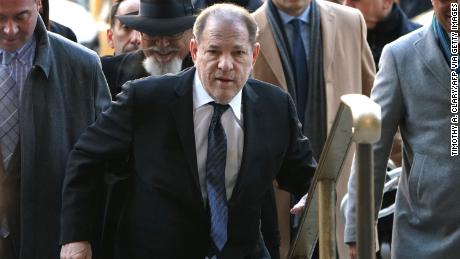
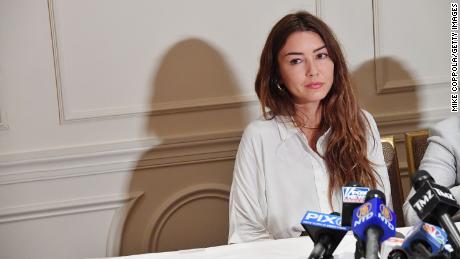
Jessica Mann took the stand Friday in Weinstein's trial in New York. Her testimony is connected to the most serious of the five charges against the Hollywood movie tycoon.
Mann described meeting Weinstein in Los Angeles in 2012 or 2013, how he seemed interested in her acting career and how the interactions went from discussions about the movie industry to two alleged rapes.
Harvey Weinstein assured a woman that he had a vasectomy before allegedly raping her, she testifies
Prosecutors have said Weinstein raped and sexually assaulted young women, including Mann, over the course of decades. Weinstein's lead attorney, Donna Rotunno, attacked the credibility of Mann's stories on Friday, suggesting instead that Mann lied and manipulated Weinstein.
Mann testified that whenever she spoke to Weinstein, she used "exaggerated" flattery and compliments because "his ego was fragile." She said several times that she was afraid to "trigger an anger" from Weinstein.
Weinstein's attorneys have described Mann's relationship with their client as consensual and "loving," and have highlighted one text that Mann sent to Harvey in February 2017.
"I love you, I always do. but I hate feeling like a booty call. :)" she wrote, according to attorney Damon Cheronis.

He'd talk about acting and offered scripts for a film, she says

Mann, who grew up in a small town in Washington state, met Weinstein at a party in Los Angeles in 2012 or 2013 when she was 25. In court, she recalled how he offered to teach her about the "history of the business" and met with him in several places, including a bookstore and an Italian restaurant.
But she said Weinstein asked her for a massage during what she thought was a professional dinner at the Peninsula Hotel in Los Angeles. She testified that she "very awkwardly" gave Weinstein a massage while he lay on the bed face down still wearing his pants.
Mann testified that Weinstein made her feel "stupid" and told her she was making a big deal when she said she didn't want to give him a massage.
After that incident Mann started receiving invitations to events and sometimes would still meet Weinstein to talk about acting. At one point, they met following a party and Weinstein told her that he would give her and a friend scripts for a film once they went to his suite. That night, he forced her to have oral sex, Mann testified.
Former production assistant testifies that Harvey Weinstein pinned her down and assaulted her
Mann said she fought to get away from him but eventually gave in and faked an orgasm to make him stop.
She testified about having "non-forcible sex" with Weinstein on multiple occasions over time as recent as 2016 and how they began a relationship, which she described as abusive.
Her relationship with Weinstein felt "like being discarded." He could be charming and informative but "behind closed doors it would be dependent upon if I gave him what he wanted," Mann said.
"It was like Jekyll and Hyde," Mann said of Weinstein's demeanor toward her.

He raped her at a hotel in New York, she testified

Weinstein first raped her in 2013 at a DoubleTree hotel in New York where he was supposed to meet her and her friends for breakfast, she testified.
Mann tried to stop him from getting a room, sort of causing a scene, and Weinstein pulled her away from the front desk and told her not to embarrass him. Inside the hotel room, she tried to run out, but he slammed the door twice as she grabbed the handle.
She then followed his orders to undress and get on the bed. He sounded "like a drill sergeant," Mann said.
Weinstein then laid on top of her and raped her, she testified.
After the alleged raped, Mann and Weinstein met her two friends for breakfast because she didn't want them to know what happened, Mann testified.
These are the women who plan to testify against Harvey Weinstein
Sometime later, Mann met Weinstein at the Peninsula Hotel in Los Angeles, where she had worked as a hairstylist, and told him that she was dating an actor. The producer became angry, yanked her up from a chair and screamed, "you owe me one more time," she testified sobbing.
Weinstein then demanded she take her clothes off and when she refused, Mann said, he ripped her pants "so hard and so fast off of me that I had three scratches down each leg to the top of my thighs to right above my knee."
He forcibly performed oral sex and raped her, she testified.
"I couldn't breathe he was so heavy on me," Mann said. "I just remember looking at the TV and staring at it."
Afterward, Weinstein told her that she could have her relationship now and become his "wing girl," Mann said.
He then apologized and justified the assault saying, "I just find you so attractive I couldn't resist," she recalled.
"We're friends, right?" Weinstein added, according to Mann.

Defense says woman manipulated Weinstein

During cross-examination, Rotunno asked Mann whether she was using Weinstein and not the other way around.
Rotunno suggested that Mann tried to hide her relationship from her friend during their 2013 trip to New York because he was an agent in the industry and Mann was going to introduce him to Weinstein as a favor.
When Rotunno said that it would reflect badly on Mann if her friend knew of her sexual encounters with Weinstein, Mann agreed with her.
The defense questioned Mann about pretending to want consensual sex with Weinstein and lying to her friends about their relationship.
Mann was asked to read an excerpt from her personal blog in which she details a three-way sexual encounter similar to one she testified to earlier on Friday. She said the blog post was meant to be "expounded on" comedy and not meant to reflect all of the exact details of the incident.
The blog post describes an encounter that she planned with an older man and a beautiful Italian woman. In her post, she wrote that she stopped the three-way because she didn't like it but did not mention that she ran to the bathroom crying, as she testified in court. The blog post does not explicitly name Weinstein.
Weinstein's attorneys requested a mistrial twice on Friday, but the judge denied both motions. They claimed prosecutors withheld the existence of witnesses who could corroborate testimony from model Tarale Wulff, another of Weinstein's accusers. Later in the day, they said prosecutors withheld evidence about consensual sexual interactions between Mann and the producer.
Mann will return to the stand Monday to resume cross-examination.

Let's block ads! (Why?)

from CNN.com - RSS Channel https://ift.tt/2vxg99x

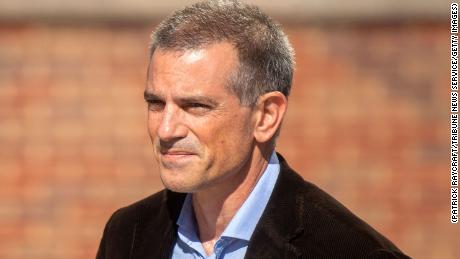
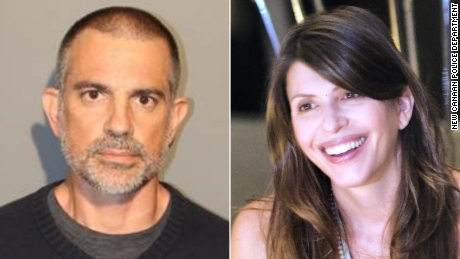
Fotis Dulos has been declared dead, his lawyer says

Authorities believe Dulos made an apparent suicide attempt Tuesday, according to two law enforcement sources. He was in "dire" condition Wednesday at a New York hospital, his attorney said, and he was in a hyperbaric chamber
"His family came in from Greece and decided today to donate his organs so that he will live on in some form in the assistance that he can provide to others in their own individual struggles," Norm Pattis told reporters Thursday.
Authorities believe Fotis Dulos, the estranged husband of missing Connecticut mom, attempted suicide
The estranged husband of Jennifer Farber Dulos failed to appear at an emergency bond hearing Tuesday after one of the properties used to secure his $6 million bond was determined to be in foreclosure and didn't meet the bond requirement set by the court.
Officers later found him at his Farmington, Connecticut, house in distress and called for an ambulance. Fotis Dulos, 52, was initially taken to a local hospital for treatment of carbon monoxide poisoning and then transferred to the hospital in New York.
A Superior Court judge Wednesday ordered three re-arrest warrants for Dulos and increased his bond to $6.5 million because he missed his court hearing. At the hearing, Pattis agreed to waive extradition proceedings to allow Dulos' family to have access to him during his hospitalization.

'A horrific tragedy'

Pattis said Thursday "was tried and convicted in the court of public opinion."
"Now, he has been executed," Pattis said.
He added: "We remain committed to demonstrating he did not murder Jennifer."
Dulos' sister, brother in-law and a close friend were in the room when he was declared dead, along with Kevin Smith, another attorney representing him, Pattis told CNN.
"This is a horrific tragedy all around," Carrie Luft, a spokeswoman for Jennifer Farber Dulos' family and friends, said in a statement.
Jennifer Dulos, a 50-year-old mother of five, disappeared in May 2019 in New Canaan, Connecticut, after she dropped her children off at school. Investigators found her car near a park not far from her home, but she has not been seen or heard from since, and officials now believe she is dead.
She and Fotis Dulos were in the midst of a bitter custody battle. Jennifer Farber Dulos moved out in 2017 to a home in New Canaan and filed for divorce, court records show. She told officials she was afraid of her husband, according to court documents obtained by CNN.
Estranged husband of missing mom Jennifer Dulos violated bond conditions by stopping at her memorial, prosecutors say
"I know that filing for divorce and filing this motion will enrage him," she said, according to the documents. "I know he will retaliate by trying to harm me in some way."
Fotis Dulos denied making any threats or bullying her, according to court filings.
He and his then-girlfriend, Michelle Troconis, were arrested in June and charged with tampering with or fabricating evidence after investigators found blood stains and evidence of attempts to clean the crime scene, officials said. They pleaded not guilty.
He was arrested on murder and kidnapping charges earlier this month and again pleaded not guilty. Troconis, as well as Dulos' friend and former attorney, Kent Mawhinney, have also been arraigned on a charge of conspiracy to commit murder. Neither has entered a plea yet.
Pattis had said he was shocked after learning of his client's apparent suicide attempt.
"I saw nothing that led me to believe that," he said. "I look back and wonder what I missed."

Let's block ads! (Why?)

from CNN.com - RSS Channel https://ift.tt/2RAjn4G

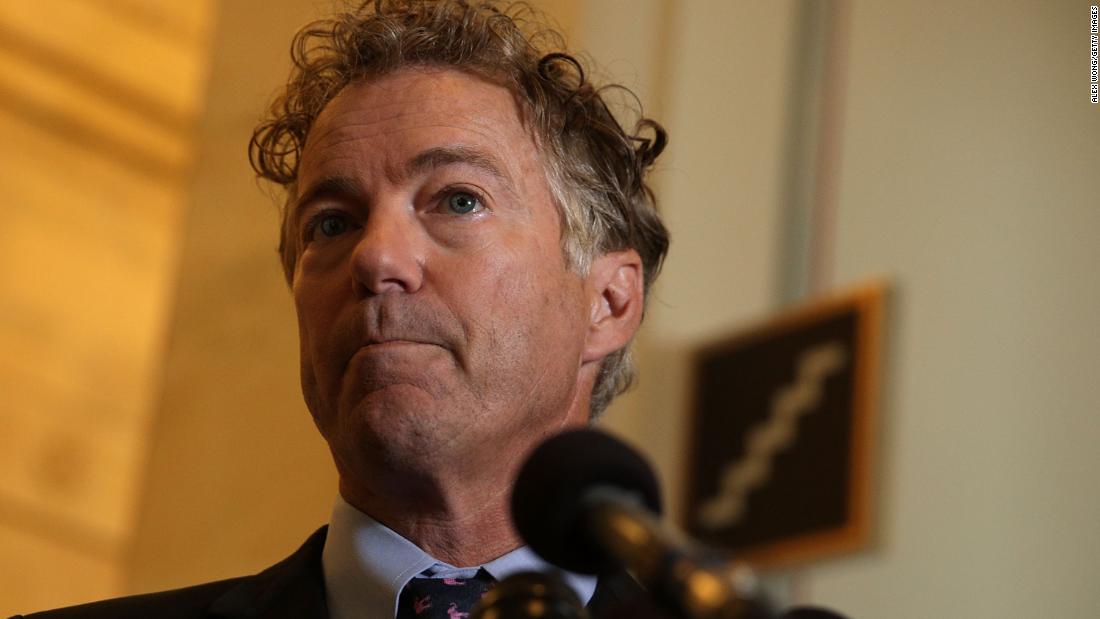
John Roberts publicly rejects Rand Paul's whistleblower question in Senate impeachment trial

"The presiding officer declines to read the question as submitted," Roberts said after receiving the question card.
Paul had expressed frustration with Republican leadership during the trial Wednesday night after it was made clear Roberts would not read his question that named the alleged Ukraine whistleblower, sources with knowledge of the situation said.
The development brought Roberts into an unusual position in the trial, where he has served in large part to guide the proceedings, not to decide or make any rulings on how they progress.
But prior to the 16-hour question-and-answer period for the trial on Wednesday, Roberts made clear that he would not read the alleged name of the whistleblower, nor would he consider questions that would move to clearly identify the individual, the sources said. Roberts, in his role, reads each question submitted by senators.
He was able to review questions from senators who submitted them prior to the start of Wednesday's proceedings, according to two sources. Paul's question, which sources said was revised several times but explicitly would have named the alleged whistleblower, ran afoul of the line Roberts drew on the matter.
Paul, for his part, could be seen and overheard expressing his frustration on the Senate floor during a break in the proceedings. "If I have to fight for recognition, I will," he was heard telling a Republican staffer.
The dispute created a behind-the-scenes issue that Republican leaders were attempting to resolve, though no solution had been reached by Wednesday evening.
Paul said during a break during Wednesday night's proceedings that "it's still an ongoing process" and the question "may happen tomorrow."
There have been several other whistleblower questions, some that even included identifying information, which Roberts has read. It's the alleged name itself that is his red line, sources said.
The disputed question -- an unprecedented situation -- comes on the first day senators have had a chance to be heard in the impeachment trial by submitting questions to be read aloud by Roberts directed at one or both of the legal teams. While several Republicans have called for the whistleblower's identity to be revealed in the past, Paul's attempted question on the Senate floor marks the most notable escalation to date.
The question falls in line with President Donald Trump's own repeated calls for news organizations to identify the whistleblower.
"There have been stories written about a certain individual, a male, and they say he's the whistleblower," Trump said in November, referring to reports in conservative media outlets purporting to identify the author. "If he's the whistleblower, he has no credibility. Because he's a Brennan guy, he's a Susan Rice guy, he's an Obama guy. And he hates Trump."
Days after the whistleblower complaint had been released publicly last September, Trump tweeted that he deserved to "meet my accuser."
"Like every American, I deserve to meet my accuser, especially when this accuser, the so-called 'Whistleblower,' represented a perfect conversation with a foreign leader in a totally inaccurate and fraudulent way," he said.
Roberts' refusal to read Paul's question also marks a rare moment of meaningful authority as he presides over the trial -- a position that is highly public but has largely seen him recite procedural rules, keep the clock and read aloud vote tallies.
The chief justice has long been known for his extensive preparation and an ability to foresee what's ahead, which some colleagues have likened to three-dimensional chess.
This story has been updated with additional developments Thursday.

Let's block ads! (Why?)

from CNN.com - RSS Channel https://ift.tt/317GGGs