But we should be careful about drawing too many close parallels between New Zealand and the US: the two countries are very different, both politically and culturally. And at times, attempts to highlight the comparisons have risked drowning out the experiences of the victims, whose funerals began last Wednesday.

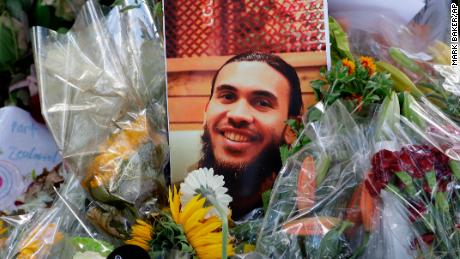
What happened in New Zealand was first and foremost an attack on that country's Muslim community. Before thinking about what the Christchurch terror attacks might mean for the United States, we should take the time to learn the stories of those killed.
But given the frustration that many Americans feel about the lack of progress on gun control, it's not surprising that much of the media focus in the United States has been on gun reform. The day after the attack, New Zealand Prime Minister Jacinda Ardern promised that New Zealand's lenient gun laws would change. And on the Thursday following the massacre, Ardern began to deliver on that promise.
New Zealand has put forward a measure to ban all military-style semi-automatics and buy back those already in circulation. The legislation is likely to pass: New Zealand's main opposition party and farming lobby have both announced that they will support the bill. Meanwhile, executive regulations will stop semi-automatics being owned and licensed.
The extent and effectiveness of the New Zealand reforms remain to be seen. Nevertheless, some Americans are already calling on the United States to follow New Zealand's lead, and asking why gun reform is so much harder to achieve in this country.
Ardern's leadership is one reason. She is principled, driven and popular. But many of the differences between New Zealand and the United States run much deeper.
Constitutional differences
Most Americans support greater restrictions on firearms. Yet politicians in the United States seem unable to deliver. Part of the reason is the American political system is designed with checks and balances, creating plenty of veto points for entrenched opponents. To pass comprehensive federal gun control, lawmakers would need to build majorities in the House and the Senate. They would then need the support of the President, or else have enough support to overcome a presidential veto. That takes a lot of cooperation: something that is in short supply in gridlocked Washington today.
The American system also gives disproportionate power in the Senate to rural minorities, where gun culture is strongest. High gun-owning states, such as Montana and Wyoming, send as many senators to Washington as more populous (but lower gun-owning) states such as Illinois and Massachusetts.

Even if the legislative and executive branches could pass gun control, there is no guarantee that it would be constitutional. The Second Amendment famously secures "the right of the people to keep and bear Arms." In 2008, the Supreme Court found that a ban on handguns would violate that right. Although some limits on gun ownership are lawful, it is not clear whether these include a ban on semi-automatics. At the very least, a legislative ban would face lengthy court challenges.
By contrast, New Zealand's constitutional system is designed to be representative and nimble. Parliament is proportional: seats are generally allocated on the basis of a nationwide vote. And under New Zealand's parliamentary system, majority parties in the legislature also lead the executive, reducing the chances of disagreement between the branches of government. Furthermore, there's only one House of Parliament. And under New Zealand's constitution, courts cannot strike down laws passed by Parliament.
There's a trade-off here. The absence of checks and balances might mean that it would be easier for a populist party to take control of the New Zealand government without being held to account. But it does make legislation easier to pass.
Cultural differences
There's also a big difference in gun culture. Although New Zealand has a high rate of gun ownership (at 26.3 guns per 100 people), guns are associated with a rural culture of hunting and pest control; not self-defense. Indeed, New Zealand's police force do not usually carry firearms, and the police union supports gun control.

That's very different to the United States, where gun ownership has been woven into a narrative about American freedom. Lobby groups, such as the National Rifle Association (NRA), draw on America's revolutionary past and the Second Amendment as part of a fundamental right to self-defense, and 60% of American gun owners say that their main reason for owning a gun is personal safety.
This narrative makes it harder to persuade some Americans to support gun control, and allows groups such as the NRA to paint opponents as disloyal or corrupt. The powerful emotions generated by this narrative create an enthusiasm gap: even though they may be fewer, opponents of gun control are more passionate about the issue than those on the other side.
The role of money in politics

Relatedly, there's a massive difference in the influence of special interests. The NRA reported a lobbying expenditure of over $5 million in 2018, and according to the Center for Responsive politics, it spent a whopping $36 million during the 2017 election cycle. Furthermore, the NRA's dedicated membership base provides it with a core of supporters who can potentially make or break a candidate's chances of reelection.
New Zealand also has a gun lobby. Although small and without any full-time lobbyists in Wellington, it nevertheless was able to block previous attempts at gun reform. But it wields nothing like the power of the NRA. The lack of a large supporter base means that the electoral risk for politicians is much lower, and New Zealand's electoral laws -- which more tightly restricts donations and spending by third parties -- reduce reliance on special interests. A single horrific terror attack is enough to overcome the gun lobby's influence.
An uncomfortable truth
International comparisons cannot provide a silver bullet solution to America's experiences of gun violence. The New Zealand response is a product of a culture with a different approach to guns, and a political system that allows for quick responses to immediate problems. That has a cost, and some New Zealand scholars are uncomfortable with the lack of checks and balances in their constitutional system. But, in the trade-off between efficiency and safeguards, Kiwis have preferred the former.
If anything can be learned from overseas experiences, it is that the roots of America's gun control impasse lie very deep. If gridlock is to be broken, it will only be through comprehensive and structural change.
No comments:
Post a Comment