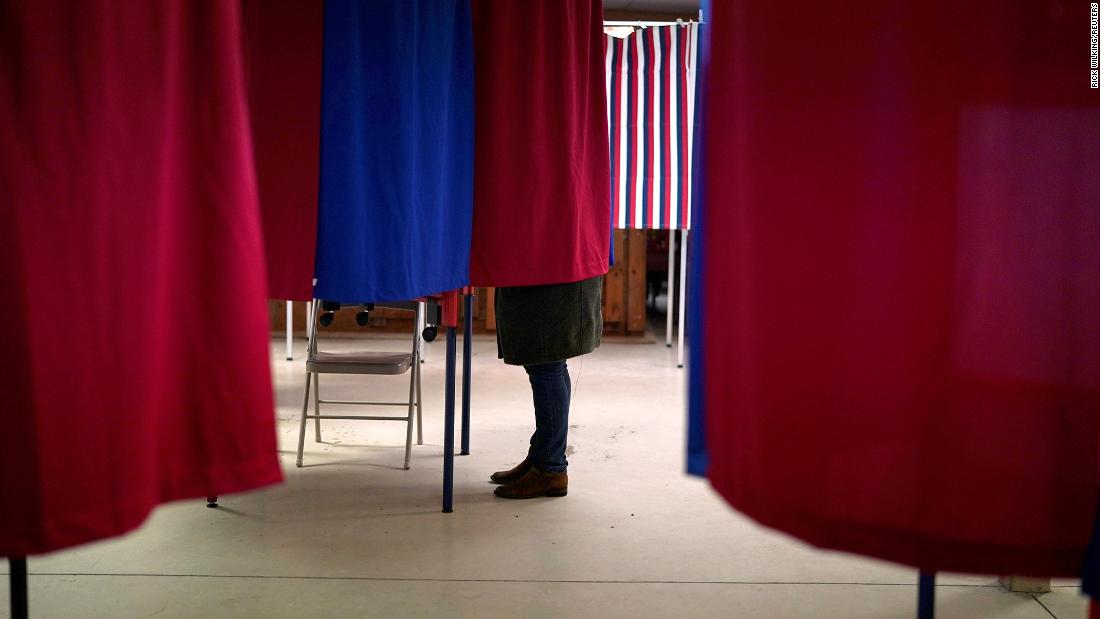
Most of the polling thus far has pointed to a strong finish for Sanders, who hails from the neighboring state of Vermont and carries the advantage of having defeated Hillary Clinton in the 2016 Granite State primary by more than 20 points.
But the famously mercurial voters of New Hampshire like to surprise rather than ratify Iowa's results and the large number of independent voters in the state -- who are permitted to vote in either party's primary -- could elevate a late-surging candidate like Minnesota Sen. Amy Klobuchar or Buttigieg, the former mayor of South Bend, Indiana.
Polling thus far indicates that New Hampshire has proved to be another stumbling block for former Vice President Joe Biden, who has drawn small crowds in recent days and made the telling decision to abruptly abandon his election night party in favor of heading to South Carolina, a state where he hopes his strong support among African American voters can buoy his quest for the Democratic nomination.
In CNN's final New Hampshire tracking poll, 29% of likely primary voters favored Sanders, 22% said they were supporting Buttigieg, 11% planned to back Biden, 10% said they were for Massachusetts Sen. Elizabeth Warren and 7% said they were backing Klobuchar.
Also, according to CNN's tracking poll, many voters were still undecided in recent days -- only about half of likely primary voters said they had made a final decision on their candidate. CNN's tracking poll was conducted by the University of New Hampshire Survey Center.
Warren, who finished third in Iowa, had been expected to do well in New Hampshire given that she represents a neighboring state. But, in a memo shared with her supporters, her campaign manager Roger Lau signaled that her campaign was also looking beyond the New Hampshire results for a comeback.
In a fundraising email, he emphasized that the campaign has plans "to organize in all 57 states and territories" and highlighted that "there is no candidate that has yet shown the ability to consolidate support."
"As we've seen in the last week, debates and unexpected results have an outsize impact on the race, and will likely keep it volatile and unpredictable through Super Tuesday," Lau wrote in the memo.
Biden, who finished fourth in Iowa, dismissed predictions of his demise during a visit to a polling location in New Hampshire on Tuesday morning. He explained his leap ahead to South Carolina by saying there are still "significant portions of the electorate who haven't voted yet," a reference to the more diverse contests that will occur over the next month including Nevada, California and North Carolina.
"We're still mildly hopeful here in New Hampshire," Biden said. "And we'll see what happens."
But the first hints of potential New Hampshire upset came shortly after midnight on Tuesday when voters from three tiny towns in northern New Hampshire cast their ballots.
Though the three towns -- Dixville Notch, Hart's Location and Millsfield -- comprise a tiny portion of the votes, Klobuchar led the field with eight votes. Former New York Mayor Michael Bloomberg -- who isn't even on the New Hampshire ballot because he's competing in later primary states -- received two write-in votes on the Democratic side.
With her moderate credentials and proven ability to win in the Midwest, Klobuchar could potentially benefit from high turnout among independent, or so-called undeclared voters in New Hampshire. Their participation could also boost Buttigieg, who campaigns on the premise that he can appeal to what he calls "future former Republicans across the country."
Independent voters in New Hampshire are allowed to select a ballot from either party on Election Day, thougha voter who is registered with one party may only vote in that party's primary. The state's eligible residents are also permitted to register and vote for the first time on Election Day in the party of their choice.
According to the early exit polls, independents were on track to make up a strong share of the electorate. Fifty-three percent of voters identified themselves as Democrats while independents comprised 43% of the electorate.
Nearly a third of voters said they made up their minds in the past few days. And six in 10 Democratic voters said they prioritized a nominee who could beat President Donald Trump over a candidate who agrees with them on the issues.
There are 24 Democratic delegates are at stake in Tuesday's contest. But despite its first-in-the-nation primary status, New Hampshire has not has not always been predictive of the presidential nominee.
Former Presidents George W. Bush and Barack Obama, along with 2016 Democratic presidential nominee Hillary Clinton, lost New Hampshire but went on to win the nomination.
On the flip side, the state has given new life to struggling candidates. Though Bill Clinton lost New Hampshire in 1992 to then-Massachusetts Sen. Paul Tsongas, his surprise second-place finish allowed him to claim the mantle of the "Comeback Kid."
Hillary Clinton was in deep trouble after Obama's surprise victory in Iowa in 2008, where she came in third. But after making a big push in New Hampshire, she beat Obama with a three-point-margin, breathing new life into her campaign.
Most polls close in New Hampshire at 7:00 p.m. ET, but some are open until 8:00 p.m.

No comments:
Post a Comment